


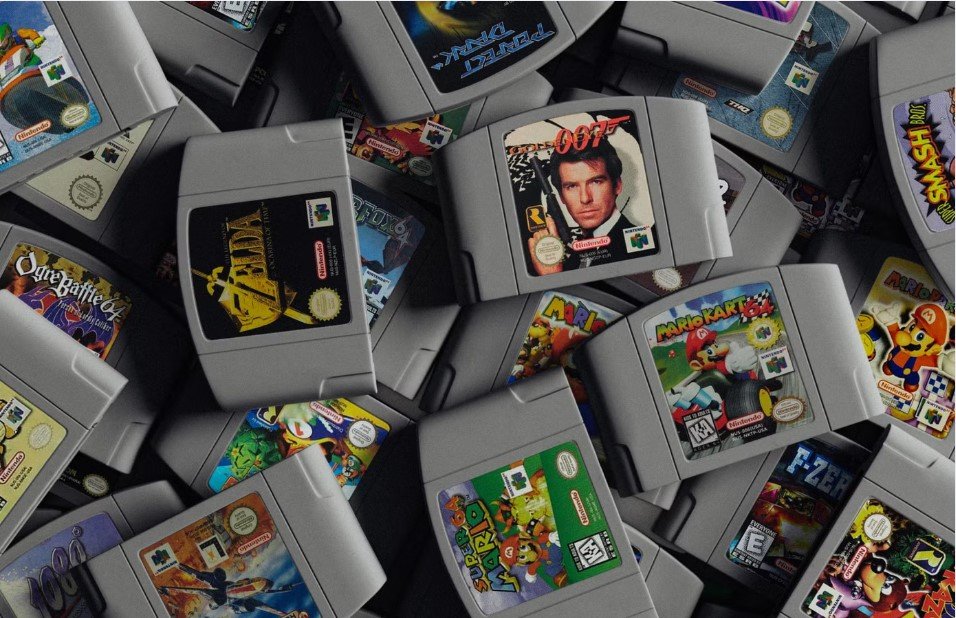
For decades, fans of the Nintendo 64 have hoped for a modern way to experience their favorite classics without blurry visuals, aging consoles, or unreliable emulators. That dream is now closer to reality than ever. Retro hardware manufacturer Analogue has officially announced the Analogue 3D, a new FPGA-powered system designed to bring N64 4K gaming into the modern era. With true hardware-level compatibility, 4K output, and authentic display modes that emulate classic CRT visuals, the Analogue 3D promises to become the definitive way to experience Nintendo 64 games today.
The announcement has already captured massive attention across retro gaming communities, and the ongoing interest in the phrase n64 4k reflects the excitement surrounding this breakthrough. This comprehensive guide explores everything you need to know about the Analogue 3D, including its technology, capabilities, design philosophy, expected release, hardware accuracy, and its significance for retro gaming preservation.
Why N64 4K Matters
The challenge of modernizing Nintendo 64 hardware
The Nintendo 64 remains one of the most beloved consoles of all time, but it also poses significant challenges for modernization:
Complex architecture
Unique controller inputs
Variable frame rates
Low-resolution output
Analog video distortion
Most modern N64 solutions rely on emulation, often introducing:
Input lag
Visual inaccuracies
Compatibility problems
Audio inconsistencies
Unstable game performance
An authentic, hardware-accurate way to play N64 games in 4K has long been considered nearly impossible. That’s why the Analogue 3D announcement is such a major moment.
Retro gaming demand is increasing every year
Classic games continue to gain relevance as enthusiasts rediscover retro titles and preservation becomes a global priority. The N64 in particular has a massive following due to landmark titles like:
Super Mario 64
The Legend of Zelda: Ocarina of Time
GoldenEye 007
Mario Kart 64
Super Smash Bros
Banjo-Kazooie
Star Wars: Rogue Squadron
Fans searching “n64 4k” want to play these games with crystal-clear modern visuals without sacrificing authenticity.
Analogue 3D: The Hardware Bringing N64 4K to Reality
FPGA-powered — not emulation
Analogue emphasizes a central selling point: the Analogue 3D uses FPGA hardware recreation, not software emulation. This means:
No frame pacing inconsistencies
No emulation artifacts
No off-timing or logic errors
Cycle-accurate reproduction of the original console
Native support for physical N64 cartridges
FPGA, or field-programmable gate arrays, allow engineers to reprogram physical circuits that mimic original hardware. This is the closest you can get to using a real Nintendo 64 without owning one.
100% region compatibility
Analogue claims that the Analogue 3D will support N64 cartridges from:
North America
Japan
Europe
This is significant because classic consoles often needed region-specific hardware. Full cross-regional support means collectors and casual users alike can play any cartridge without worrying about incompatibility.
True 4K output
One of the major highlights is native N64 4K support. Games originally built for 240p–480i will now be displayed in ultra-high resolution. This brings:
Sharper textures
Cleaner polygons
Reduced blur
Stable widescreen scaling
Enhanced color accuracy
Gamers will finally see what their favorite N64 titles look like without analog noise or visual degradation.
Era-authentic CRT and PVM modes
For purists who want the original Nintendo 64 experience, Analogue is integrating era-accurate display modes. These include:
CRT television recreation
Professional video monitor (PVM) modes
Color temperature matching
Scanline simulation
Phosphor glow replication
These display options aim to mimic how games looked in the 1990s, down to the subtleties of older screen technology.
Also Read This:- Unlocking the Secrets of Cellulogia: A Comprehensive Guide
Connectivity and Controller Support
Four original controller ports
Just like the original N64, the Analogue 3D features four built-in controller ports. This is crucial for:
Mario Kart 64
GoldenEye 007
Super Smash Bros
Mario Party
Excitebike 64
Diddy Kong Racing
Many of the N64’s most iconic experiences depend on local multiplayer, and Analogue 3D maintains full support for authentic controllers.
Bluetooth and 2.4 GHz wireless support
Analogue also confirmed wireless connectivity features, meaning:
Support for modern wireless controllers
Low-latency gameplay
Compatibility with upcoming accessories
This offers the best of both worlds: classic controller support + modern wireless convenience.
New controller from 8BitDo
8BitDo is creating a Nintendo 64-compatible wireless controller designed specifically for the Analogue 3D. It avoids the original trident-style shape and updates the ergonomics while maintaining full button compatibility.
The controller is expected to include:
Improved analog stick
Modern layout
Wireless connectivity
High durability
This controller alone is generating major excitement among fans searching for n64 4k options with modern inputs.
Design Philosophy of the Analogue 3D
A modern reinterpretation of classic hardware
Analogue has shown only a small teaser of the Analogue 3D, but the visible corner suggests:
A curved, premium aesthetic
Solid build quality
Minimalist design
A compact form factor
Although pricing has not been confirmed, previous Analogue products have ranged between $199 and $249, placing the Analogue 3D in a premium-but-accessible range.
Focus on preservation and accuracy
Analogue has consistently branded itself as a company dedicated to:
Preserving gaming history
Recreating legacy hardware in modern form
Delivering accuracy rather than emulation shortcuts
Providing archival-quality video output
Their products are used by collectors, archivists, speedrunners, game developers, and enthusiasts seeking accurate legacy hardware behavior.
N64 4K: What 4K Really Means for Nintendo 64 Games
Visual clarity that was never possible in the 1990s
The N64 was famous — and infamous — for its graphical style:
Soft textures due to hardware limitations
Heavy anti-aliasing
Smudged shapes from low-resolution output
Jagged polygons masked by blur
4K output transforms the visual experience dramatically by revealing:
Sharper geometry
Cleaner details
Stable depth perception
Improved color vibrancy
Polygon-based games benefit even more than sprite-based ones at high resolutions.
Challenges of scaling N64 graphics
N64 games used:
Texture compression
Limited texture memory
Dynamic lighting effects
Z-buffering
Upscaling these systems requires careful engineering to avoid distortion.
Analogue’s FPGA approach ensures scaling is handled naturally at the hardware level, not through artificial upscaling filters.
Also Read This:- Why Businesses Are Moving From Manual Quality Management Systems to Intelligent QMS Software
Widescreen enhancements and UI preservation
Many users wonder how 4K impacts HUD elements, menus, and text. A high-quality N64 4K system must ensure:
Menus remain crisp
Text does not become distorted
UI scales proportionally
Gameplay FOV remains faithful
Analogue has experience handling these complexities in previous consoles, making expectations for UI handling very high.
Why Hardware Accuracy Matters for N64 4K
Emulators struggle with the Nintendo 64 more than most systems
The N64 is one of the hardest consoles to emulate because of:
Its custom Reality Coprocessor
Unique memory architecture
Microcode variations
Timing-sensitive game logic
No emulator is 100% accurate. Games often suffer from:
Glitches
Texture errors
Lighting inconsistencies
Frame pacing issues
Physics discrepancies
FPGA circumvents these problems by recreating the hardware directly.
Speedrunners demand accuracy
For speedrunners playing games like:
Ocarina of Time
GoldenEye
Super Mario 64
Perfect Dark
Precise timing is essential. An FPGA-based N64 4K system could become a new standard for competitive players seeking reliable timing.
Preservationists value hardware recreation
Preserving old games requires more than ROMs — it requires:
Accurate reproduction of hardware behavior
Proper analog signal handling
Support for original cartridges
Faithful input response
Analogue’s commitment to authenticity makes the 3D especially important for long-term game preservation.
Impact on the Retro Gaming Community
Increased demand for original cartridges
The launch of an N64 4K-capable console will likely:
Increase cartridge prices
Boost collector activity
Revive interest in rare games
Expand the retro market
Nintendo 64 cartridges such as:
ClayFighter Sculptor’s Cut
Bomberman 64: The Second Attack
Harvest Moon 64
Ogre Battle 64
May see a spike in value as fans prepare for an N64 4K platform.
Renewed interest in multiplayer classics
Titles that were built for couch co-op will experience a renaissance. Fans will reconnect with:
Four-player GoldenEye
Mario Party marathons
Smash sessions
Battle mode in Mario Kart 64
High-definition output makes these multiplayer experiences even more entertaining today.
Content creators and streamers benefit
Retro streaming is at an all-time high. Streamers who cover:
Speedruns
Retro reviews
Hardware comparisons
Modding content
Preservation analysis
will naturally adopt the Analogue 3D to deliver cleaner N64 4K footage.
The Analogue 3D Release Timeline and Price Speculation
Expected release window
Analogue has confirmed a 2024 release, but no exact date has been announced. Based on previous Analogue launches, the timeline suggests:
Announcement → Preview → Preorders → Release
Typical window: 6–12 months
Expected price range
Analogue consoles historically cost:
Analogue Pocket – $219
Mega Sg – $199
Super Nt – $199
Analogue Duo – $249
The N64 4K-capable Analogue 3D will likely fall between:
$229 and $299
This range aligns with FPGA costs, manufacturing complexity, and N64 architecture challenges.
Comparison: Analogue 3D vs. Original N64 vs. Emulation
Analogue 3D advantages
4K resolution
No emulation
Zero-lag accuracy
Cartridge support
Wireless controller options
CRT/PVM display modes
Region-free hardware
Modern connectivity
Original N64 advantages
Authentic nostalgia
Lower cost (when available)
Guaranteed compatibility
Weaknesses include:
Low resolution
Analog output degradation
Controller stick wear
Aging hardware
Emulator advantages
Convenience
Free software
Customization options
But major drawbacks include:
Inaccurate emulation
Input lag
Graphic artifacts
Inconsistent compatibility
The Analogue 3D occupies the ideal middle ground: accuracy + modern display support.
Future Possibilities for N64 4K Technology
Potential for modding communities
Modders may explore:
Texture replacement
Widescreen hacks
Restored content
Custom patches
Expanded multiplayer
The Analogue 3D could become a powerful testing platform.
Support for accessories
While not confirmed, fans speculate that the Analogue 3D could support:
Rumble Pak
Controller Pak
Transfer Pak
If fully compatible, this would unlock unique gameplay experiences.
Long-term preservation impact
If successful, the N64 4K effort may inspire similar FPGA systems for:
GameCube
PlayStation 2
Dreamcast
Sega Saturn
This could represent a major shift in retro gaming preservation.
Conclusion
The rise of interest in n64 4k gaming reflects a growing desire to preserve and revitalize classic gaming experiences in modern clarity. The Analogue 3D represents a landmark advancement in retro hardware, combining hardware-accurate FPGA technology with stunning 4K output, authentic CRT-style display modes, and full cartridge compatibility.
For fans of the Nintendo 64, this console promises the most faithful, visually impressive, and future-proof way to enjoy the library of beloved classics. Whether you’re a collector, a preservationist, a content creator, or simply a nostalgic fan eager to relive childhood favorites, the Analogue 3D offers a compelling new standard for retro gaming.
The blend of authenticity and modern convenience marks a new era for the Nintendo 64 — one that elevates the original 1996 console to a level of clarity and accuracy that was unimaginable before.
FAQs
What does N64 4K mean?
It refers to Nintendo 64 games running at ultra-high-definition 4K resolution through modern hardware like the Analogue 3D.
Does the Analogue 3D use emulation?
No. It uses FPGA technology to recreate N64 hardware.
Can original N64 controllers be used?
Yes. The Analogue 3D includes four original controller ports.
Does it support cartridges from all regions?
Yes. It supports U.S., European, and Japanese cartridges.
What will the Analogue 3D cost?
Official pricing is not announced, but previous Analogue consoles cost $199–$249, making a similar price likely.
For More Latest Update doodlesmagazine
