


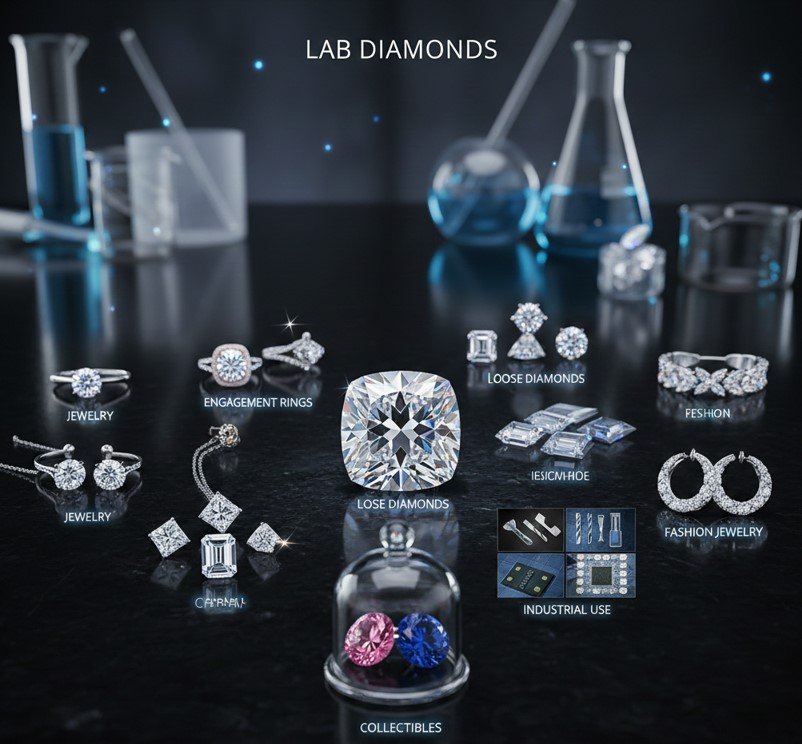
In today’s evolving jewelry market, lab diamonds have become a standout choice for buyers looking for beauty, value, and ethical clarity. These diamonds offer all the brilliance consumers expect while introducing a modern, sustainable alternative to mined stones. Their growing popularity reflects changing priorities among buyers who want transparency, affordability, and responsible luxury.
Origin Story of lab diamonds
The origin of lab diamonds can be traced back to scientific breakthroughs aimed at replicating natural diamond formation. Researchers wanted to create diamonds with the same physical, optical, and chemical characteristics as those formed deep within the Earth. Early experiments in the mid-1900s focused on high-pressure, high-temperature methods, but the stones were small and mainly used for industrial cutting tools.
As technology advanced, scientists developed two powerful methods—HPHT (High Pressure High Temperature) and CVD (Chemical Vapor Deposition). These techniques allowed the creation of gem-quality that could rival natural stones in beauty and durability. Inspired by a rising demand for ethical alternatives, jewelers and consumers embraced lab-grown diamonds as a modern, responsible option.
The ‘Age’ of lab diamonds
While the technology behind began developing decades ago, their mainstream popularity is relatively recent. The 2000s brought major advancements that allowed the creation of larger, clearer, and more consistent stones. As consumer awareness grew, lab-grown diamonds transitioned from experimental products to premium jewelry options.
By the mid-2010s, demand surged due to increased transparency, global sustainability movements, and improved production methods. Today, lab diamonds sit at the center of a modern luxury shift—appealing to younger generations who value ethical choices without compromising beauty or quality.
Physical Appearance: The Look & Feel
One of the most striking things about lab diamonds is that they look identical to natural diamonds. They have the same clarity, brilliance, fire, sparkle, and overall structure. Their physical properties—including hardness, refractive index, and durability—match those of natural stones because they’re made of pure carbon crystallized in the same way.
The appearance includes:
• stunning brilliance and light performance
• excellent hardness (10 on the Mohs scale)
• identical cuts and shapes
• flawless or nearly flawless clarity options
Under a microscope, only advanced equipment can distinguish a lab diamond from a mined one. For everyday buyers, the experience is visually indistinguishable from natural diamond jewelry.
Core Personality & Traits
The “personality” of lab diamonds is shaped by values of innovation, purity, and progress. If these gemstones were a person, they’d represent modernity, responsibility, and refined elegance. Their traits include:
• purity — free from historical mining concerns
• innovation — created with advanced scientific methods
• sustainability — reduced environmental footprint
• affordability — offering luxury at accessible prices
• modern elegance — appealing to contemporary buyers
These traits make lab-grown diamonds a symbol of forward-thinking luxury—a reflection of consumers who prioritize ethics along with beauty.
Also Read This:- Watch Winder: All About watch winder Features, Benefits, and How They Work
Mission & Values Behind lab diamonds
The mission behind lab diamonds is grounded in providing luxury with transparency and integrity. These gems aim to give consumers the option to enjoy brilliance without contributing to environmental harm or unethical mining practices. They embody modern values such as:
• eco-friendly production
• reduced carbon footprint
• conflict-free origins
• accessible pricing
• transparency in sourcing
These values have reshaped the jewelry world by holding brands accountable and giving buyers the power to choose responsible elegance.
Major Relationships & Ecosystem Connections
lab diamonds exist within a broad ecosystem connected to jewelers, gemologists, certification bodies, technology labs, and sustainability advocates. Jewelers rely on advanced diamond-production labs to supply stones that meet strict quality standards. Certification institutions analyze each stone to grade clarity, cut, color, and carat weight.
Lab diamonds also connect deeply with consumers who prioritize ethical choices, as well as fashion influencers seeking modern luxury. These relationships form a collaborative network that pushes the jewelry industry toward innovation and accountability.
Friends & Rivals in the Gem Industry
In this biography-style narrative, lab diamonds have “friends” and “rivals.” Friends include gemstones like moissanite, which shares brilliance and ethical appeal, or cubic zirconia, which offers affordable sparkle. These gems coexist in the same market, catering to different buyer preferences.
Rivals include natural diamonds, which dominate traditional luxury markets. While natural stones hold generational prestige, lab diamonds challenge this dominance by offering equal beauty and improved ethical benefits. Competition between these industries encourages innovation and clarity in the jewelry world.
The Role of lab diamonds in Modern Jewelry
Today, lab diamonds play a transformative role in modern jewelry. They are widely used in engagement rings, wedding bands, necklaces, earrings, bracelets, and high-end fashion pieces. Their affordability allows buyers to choose larger or higher-quality stones without exceeding their budget.
Furthermore, lab-grown diamonds are redefining luxury. Consumers increasingly prioritize ethics and sustainability, and lab diamonds meet these expectations effortlessly. Designers appreciate these stones because they offer consistent quality, enabling intricate and flawless jewelry creations.
Achievements and Significant Milestones
Over time, lab diamonds have achieved several important milestones:
• being recognized by major certification labs like IGI and GIA
• appearing in top jewelry stores worldwide
• becoming popular choices for engagement rings
• advancing in size, color options, and clarity grades
• gaining acceptance from global luxury consumers
These achievements highlight a major cultural shift. Lab-grown diamonds are no longer alternatives—they’re becoming mainstream luxury.
Challenges Faced
Despite their success, lab diamonds face challenges. Misconceptions remain, with some consumers falsely believing lab-grown stones are not “real.” Market confusion about differences between moissanite, cubic zirconia, and lab diamonds sometimes complicates purchasing decisions.
Pricing fluctuations also occur due to rapid technological advancements. Competition with natural diamonds continues, especially among traditional buyers. Finally, transparency in labeling remains important to ensure consumers understand what they’re purchasing.
Future Outlook of lab diamonds
The future of lab diamonds appears incredibly promising. Technology continues to improve, making production more efficient and environmentally friendly. As sustainability becomes a global priority, lab-grown diamonds are positioned to lead the future of luxury jewelry.
Expect trends such as:
• AI-enhanced diamond growing tools
• larger and more complex diamond shapes
• improved environmental certifications
• widespread global adoption
• integration into luxury fashion brands
As environmental awareness grows, more consumers will shift toward lab diamonds, solidifying their role in the jewelry industry.
Also Read This:- Corteiz Hoodie – The Ultimate Streetwear Icon Redefining Modern Fashion
Conclusion
In a world increasingly focused on ethical choices, lab diamonds represent the perfect blend of brilliance, beauty, and responsibility. They offer unmatched purity, affordability, and sustainability while maintaining the same physical and visual qualities as natural diamonds. As consumers demand transparency and eco-friendly alternatives, lab-grown diamonds continue to rise as a smart and meaningful choice for modern jewelry buyers.
FAQs About lab diamonds
Are lab diamonds real diamonds?
Yes, they have the same physical, chemical, and optical properties as natural diamonds.
Do lab diamonds look different from natural diamonds?
No, they look identical and are impossible to distinguish without specialized equipment.
Are lab diamonds durable?
Yes, they are just as durable, ranking 10 on the Mohs hardness scale.
Why are lab diamonds more affordable?
Their controlled production process avoids the high cost of mining.
Do lab diamonds hold value?
Value depends on market trends, but they remain a strong choice for ethical and luxury jewelry.
For More Latest Update doodlesmagazine
