


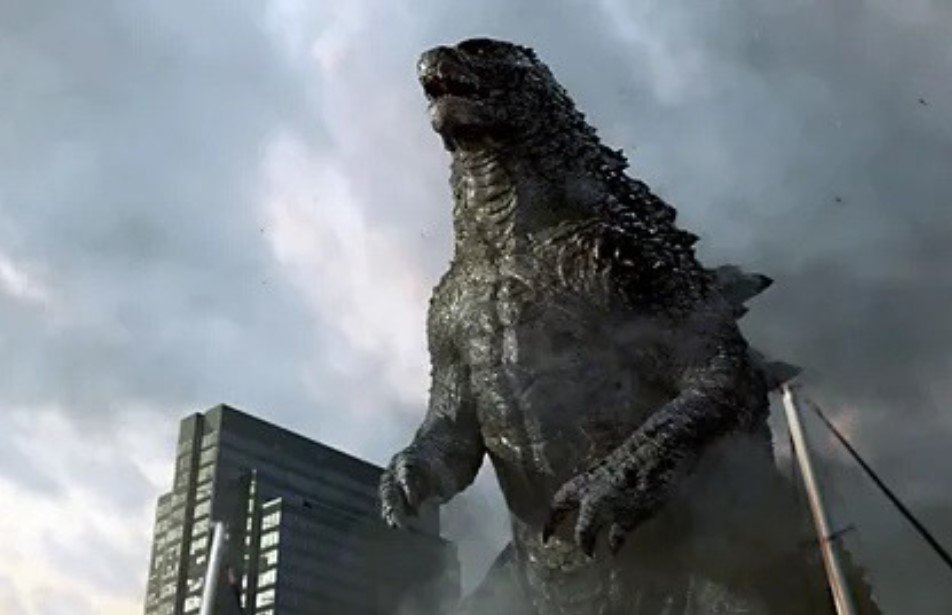
Few cinematic icons have endured, evolved, and redefined themselves over decades the way Godzilla has. Originally conceived in postwar Japan as a chilling metaphor for nuclear devastation, the monster has undergone many transformations—from fearsome destroyer to heroic defender. With Godzilla -1, the legacy comes full circle, reintroducing the monster not merely as spectacle, but as a symbol rooted in national trauma, global anxieties, and cinematic heritage.
Western audiences often regard Godzilla as kitsch: a man in a rubber suit smashing toy tanks, fighting giant moths or mechanical dragons. But beneath the surface of these so-called “kaiju films” lies a rich, politically charged mythology. Godzilla -1 revisits these origins and rekindles the dread, the awe, and the allegory that defined the original 1954 film, Gojira. This article will delve into the creation, cultural significance, and continued relevance of Godzilla -1, examining how it echoes the past while speaking powerfully to the present.
The Roots of Godzilla: From Nuclear Nightmare to National Icon
To understand Godzilla -1, one must revisit the original Gojira from 1954. Created less than a decade after the atomic bombings of Hiroshima and Nagasaki, the film was a direct response to Japan’s recent experiences with nuclear devastation. Directed by Ishiro Honda and produced by Toho Studios, Gojira was no B-movie creature feature—it was a harrowing allegory wrapped in monster movie trappings.
The inspiration for Godzilla was tragically real. In March 1954, the crew of the Japanese fishing boat Daigo Fukuryu Maru (Lucky Dragon No. 5) was exposed to nuclear fallout from U.S. hydrogen bomb tests near Bikini Atoll. The incident stirred national outrage. The fallout poisoned not only the sea but the Japanese psyche, reopening still-fresh wounds from World War II and the bombings of two cities.
The opening scene of Gojira mirrors this trauma precisely: a fishing boat is destroyed in a sudden flash of light. From the sea rises Godzilla, an irradiated titan awakened—or created—by nuclear testing. He becomes the embodiment of modern man’s hubris, a walking reminder of the dangers of uncontrolled technological advancement.
The Making of a Monster: From Disaster to Design
The monster known as Godzilla, or Gojira (a portmanteau of gorira and kujira, meaning gorilla and whale), was envisioned not as a typical villain, but as an unstoppable force of nature. Producer Tomoyuki Tanaka, facing a cancelled project, turned to the American monster genre for inspiration. Films like The Beast from 20,000 Fathoms planted the seed, but it was the collaborative effort of director Ishiro Honda, special effects genius Eiji Tsuburaya, and screenwriters Shigeru Kayama and Takeo Murata that birthed a uniquely Japanese terror.
Tsuburaya eschewed stop-motion animation for the now-famous “suitmation” technique—an actor in a heavily fortified latex suit moving through meticulously constructed miniature sets. The scale and realism achieved were groundbreaking. With scenes of Tokyo in flames, devastated hospitals, and radioactive ruins, the film struck a nerve with an audience still recovering from the real horrors of war.
Godzilla’s design reflected both prehistoric and modern anxieties: part dinosaur, part mutant, his skin was modeled after keloid scars seen on atomic bomb survivors. From the start, he was never just a monster—he was trauma personified.
Also Read This:- Kirby Dedo: The Iconic Gaming Phenomenon Capturing Hearts Worldwide
Godzilla’s Evolution: From Symbol of Destruction to Pop Culture Hero
Over the years, Godzilla underwent a dramatic shift. As Japan transitioned from postwar reconstruction to economic superpower, so too did Godzilla’s role evolve. In the 1960s and 70s, he became a defender of Earth, fighting off invading aliens and other kaiju threats like Mothra, Ghidorah, and Mechagodzilla. These films, while beloved for their creativity and camp, often lacked the political heft of the original.
By the late 70s, the franchise had declined in quality and popularity. Toho suspended production after Terror of Mechagodzilla (1975), only to resurrect the monster in 1984’s The Return of Godzilla, which aimed to recapture the serious tone of Honda’s original.
The 1998 American reboot, directed by Roland Emmerich, is widely regarded as a misstep. Redesigning the creature into a giant lizard devoid of allegory or menace, the film was criticized for missing the point of Godzilla’s metaphorical roots.
The New Millennium: Godzilla as Cultural Commentary
In 2014, Gareth Edwards rebooted Godzilla in a Western context. His film returned the creature to its status as a terrifying force of nature. Godzilla wasn’t simply a monster; he was an apex predator balancing nature’s scales, arising in the wake of human-caused disasters. The Fukushima nuclear disaster of 2011 loomed large in this interpretation, as the film opened with a nuclear power plant collapse, echoing Japan’s recent catastrophe.
Similarly, 2016’s Shin Godzilla by Hideaki Anno and Shinji Higuchi offered a bold reinterpretation. A direct response to Fukushima, Shin Godzilla depicted the bureaucratic paralysis and slow governmental response in the face of disaster. Godzilla’s grotesque evolution throughout the film represented mutation, contamination, and the fear of irreversible change. Critics hailed it as one of the most political Godzilla films since 1954.
Godzilla -1: A Return to the Franchise’s Roots
Enter Godzilla -1, a bold new entry that strips back decades of lore to focus on what made the original so unforgettable: raw fear, nuclear trauma, and existential dread. The “minus one” in the title is more than just a stylistic flourish—it symbolizes humanity not starting from zero, but from below zero. In a post-war world still licking its wounds, Godzilla emerges not just as a monster, but as the embodiment of mankind’s worst mistakes.
Like the 1954 film, Godzilla -1 centers on a Japan shattered by war and haunted by the atom. Its protagonist, a soldier returning home to a ravaged country, finds that survival is not the end of struggle. When Godzilla rises from the sea once again, it’s not merely to destroy, but to force reflection: on power, guilt, and what it means to rebuild after devastation.
Directed by Takashi Yamazaki, known for combining emotion and visual spectacle, Godzilla -1 offers a narrative that respects the franchise’s legacy while applying modern cinematic techniques. Yamazaki crafts a more human story within the chaos—reminiscent of how Ishiro Honda portrayed ordinary people caught in extraordinary events.
Godzilla -1 and the Symbolism of Nuclear Horror
What distinguishes Godzilla -1 is its thematic clarity. The film doesn’t shy away from its anti-nuclear message. Godzilla is once again a symbol of humanity’s recklessness with technology and disregard for consequences. His rampage isn’t random—it’s directed, deliberate, and devastating.
This is not the playful Godzilla of the 1970s, nor the earth’s protector of the early 2000s. In Godzilla -1, he is terror reborn, forged in radioactive fire. The film’s visuals lean heavily into this symbolism: burning cities, mushroom-cloud shaped explosions, sirens echoing across landscapes still haunted by history.
The creature’s design is perhaps the most fearsome iteration yet: scorched skin, glowing fissures, eyes filled with silent wrath. His roar is no longer just iconic—it’s a warning.
Technology, Trauma, and Survival: Modern Themes in Godzilla -1
While Godzilla -1 looks back to 1954, it also engages with modern anxieties. The world today is once again on edge—climate change, nuclear proliferation, geopolitical tension, and pandemics dominate the global conversation. These fears mirror those of Japan’s postwar years, making Godzilla more relevant than ever.
The film explores how trauma shapes both individuals and societies. Its characters carry psychological scars—much like Godzilla himself, who is not merely a beast, but a reflection of that trauma given monstrous form. Yamazaki’s direction balances personal loss with national tragedy, connecting audiences emotionally without sacrificing the scale and spectacle expected of a Godzilla film.
Also Read This:- BaddieHub: All About the Trending Platform & Its Popularity
Visual Storytelling and Cinematic Craft in Godzilla -1
Visually, Godzilla -1 is stunning. The destruction sequences are shot with terrifying precision, evoking a sense of realism that grounds the monster’s presence. The use of practical effects, combined with CGI enhancements, harks back to the handmade spirit of the original but updates it for contemporary sensibilities.
Sound design also plays a critical role. The score blends Akira Ifukube’s original themes with modern compositions, creating a sense of continuity between eras. Godzilla’s footsteps, the rumble of collapsed buildings, and his unmistakable roar are not just background—they’re integral to the storytelling.
Why Godzilla -1 Matters Today
The significance of Godzilla -1 lies in its ability to speak across generations. To older viewers, it’s a return to form—a reminder of the monster’s original purpose. To younger audiences, it’s an introduction to Godzilla as more than just an action figure or a video game character.
In an era overwhelmed with digital noise, recycled franchises, and superficial blockbusters, Godzilla -1 dares to be meaningful. It asks hard questions: What are the consequences of war? Can we ever truly recover from catastrophe? What happens when humanity’s ambition outpaces its wisdom?
By embracing these questions, Godzilla -1 elevates the kaiju genre and re-establishes the King of the Monsters not as a relic of the past, but as a prophet of the future.
Conclusion: Godzilla -1 and the Eternal Return of the Monster
For nearly 70 years, Godzilla has been a mirror. He reflects our fears, our failures, and occasionally, our hopes. From irradiated terror to pop culture phenomenon, he has never remained still. Godzilla -1 reminds us that the monster is not gone—he was merely waiting beneath the waves, ready to surface when we needed him most.
With gripping storytelling, poignant themes, and breathtaking visuals, Godzilla -1 is not just another entry in a long-running series. It is a cultural event, a cinematic reckoning, and a reminder that some monsters are born from the very things we fear to confront.
FAQs
What does the title Godzilla -1 mean?
The title symbolizes a Japan that is not starting from zero, but from below—representing deep societal trauma and existential loss in the aftermath of war and nuclear devastation.
Is Godzilla -1 a reboot or sequel?
It functions as a reimagining of the original 1954 Gojira, not connected directly to other Godzilla continuities. It’s a standalone film that returns the franchise to its thematic roots.
Who directed Godzilla -1?
The film was directed by Takashi Yamazaki, a Japanese filmmaker known for his work blending human drama with advanced visual effects.
Is Godzilla -1 connected to Shin Godzilla or the MonsterVerse?
No. Godzilla -1 is separate from both Shin Godzilla (2016) and the American MonsterVerse films like Godzilla vs. Kong.
Why is Godzilla considered a symbol of nuclear fear?
Godzilla was created in the wake of Hiroshima, Nagasaki, and the Lucky Dragon incident. He represents the uncontrollable consequences of nuclear energy and the trauma of modern warfare.
For More Latest Update doodlesmagazine
