


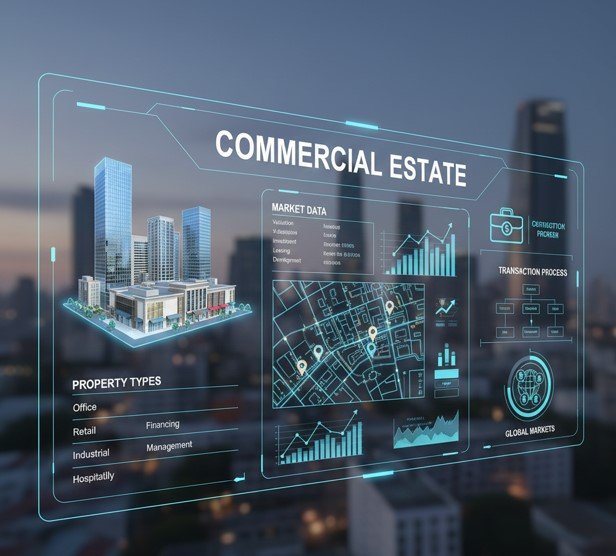
Commercial Real Estate plays a key role in shaping modern cities, business ecosystems, and economic development. From office buildings to shopping centers, warehouses, hotels, and mixed-use districts, commercial properties form the backbone of commerce and employment. Understanding how this industry works—its history, structure, and evolving market trends—helps explain why commercial real estate remains one of the most influential sectors worldwide.
Background & Origins of Commercial Real Estate
The origins of Commercial Real Estate trace back to the earliest trading hubs and marketplaces where merchants gathered to buy and sell goods. As societies expanded, so did the need for designated areas where business activities could take place. Ancient civilizations built dedicated commercial zones, and over time, these evolved into structured districts filled with shops, inns, storehouses, and trading centers.
During the Industrial Revolution, factories, warehouses, and rail-linked buildings rapidly expanded, marking the beginning of large-scale commercial property development. This foundation laid the groundwork for the modern commercial real estate landscape we see today.
History & “Age” of Commercial Real Estate as an Industry
The history of Commercial Real Estate is centuries long, but its modern form began developing in the 20th century. Cities saw the rise of:
- Early 1900s: First steel-frame office buildings
- 1950s–1970s: Suburban shopping centers and large retail malls
- 1980s–2000s: Corporate skyscrapers, logistics hubs, and global hotel chains
- 2000s–2020s: Tech campuses, coworking spaces, e-commerce warehouses
Today, the industry is more diverse and specialized than ever, reflecting global economic growth and the increasing role real estate plays in business operations.
Also Read This:- Why Certified Automotive Specialists Are the Experts You Want Under Your Hood
Physical Appearance & Property Types
The physical appearance of Commercial Real Estate varies widely depending on the type of property. Major types include:
- Office buildings with multiple floors, meeting rooms, and professional layouts
- Retail centers such as malls, plazas, and standalone stores
- Industrial properties including warehouses, factories, and distribution centers
- Hospitality properties like hotels and resorts
- Mixed-use buildings that combine retail, office, and residential spaces
Each property type is designed to support business activity, productivity, and customer interaction, contributing to the overall economic fabric of cities.
Commercial Real Estate Structure & Key Features
The structure of Commercial Real Estate depends on factors such as location, design, building quality, and intended use. Key features include:
- Accessibility and proximity to transportation
- Architectural style and building condition
- Layout efficiencies and usable floor space
- Parking, visibility, and foot-traffic patterns
- Heating, cooling, and energy systems
These features determine how functional and appealing a property is for businesses and customers.
Also Read This:- All About the LG COCO – Malviya NA? Explore the Role, Work & Impact of the Local Government COCO Officer
Categories of Commercial Real Estate
Commercial properties are grouped into categories that help identify their quality and purpose:
- Class A: High-end, newer buildings in prime locations
- Class B: Mid-tier buildings with good quality but older finishes
- Class C: Older properties requiring upgrades or located in secondary areas
Other categories include:
- Industrial (warehouses, distribution centers)
- Multifamily (apartments operated as income properties)
- Hospitality (hotels, resorts)
- Retail (malls, outlets, stores)
- Raw land (future development sites)
These classifications help professionals understand differently specialized segments within Commercial Real Estate.
Relationship With Investors & Developers
The relationship between Commercial Real Estate and investors is central to market activity. Developers create properties; investors purchase and operate them with the goal of generating business income.
Developers plan buildings based on market demand, zoning rules, and local economic growth. Investors analyze cash flow potential, long-term performance, and tenant stability. Together, they drive innovation and expansion within commercial real estate markets.
Relationship With Tenants & Businesses
Commercial properties are built to serve tenants—companies that need spaces for operations, retail, logistics, or customer service. Tenants rely on buildings that support:
- Daily business activity
- Customer accessibility
- Storage and transportation needs
- Workplace comfort
This relationship is symbiotic: tenants fuel income for property owners, while owners provide the space needed for businesses to thrive. This ongoing interaction shapes much of Commercial Real Estate strategy and development.
Economic Role of Commercial Real Estate
Commercial Real Estate contributes significantly to economic development by:
- Creating millions of jobs in construction, management, and services
- Generating local and national tax revenue
- Supporting business expansion across industries
- Driving urban development and infrastructure growth
From logistics to technology, nearly every industry depends on commercial space, making CRE essential to economic stability and progress.
Market Trends & Current Conditions
Recent trends shaping Commercial Real Estate include:
- Increased demand for industrial warehouses due to e-commerce
- Transformation of office markets as remote work reshapes workspace needs
- Growth in mixed-use communities that blend living, shopping, and working
- Shifts in retail from large malls to smaller lifestyle centers
- Rising focus on sustainability and energy-efficient design
These trends influence how developers build properties and how investors evaluate market potential.
Commercial Real Estate Financing & Valuation
Financing and valuation in Commercial Real Estate involve multiple factors such as:
- Income generated through leases
- Operational expenses
- Market conditions and location desirability
- Property condition and long-term demand
Valuation tools often include concepts like net operating income (NOI), occupancy trends, and long-term revenue potential. These financial elements help determine how properties perform compared to other commercial assets.
Risks & Challenges in Commercial Real Estate
Commercial real estate also faces several challenges:
- Market fluctuations
- Vacancy risks
- Changing tenant needs
- Shifts in interest rates
- Economic downturns
- Maintenance and renovation requirements
Understanding these challenges helps explain why the Commercial Real Estate industry evolves so frequently and requires careful long-term planning.
The Future of Commercial Real Estate
The future of Commercial Real Estate continues to be shaped by:
- Smart building technologies
- Sustainable materials and green certifications
- Remote-work influenced office redesign
- Automated and AI-enhanced property management
- Growing demand for efficient logistics real estate
As cities modernize and technology advances, commercial properties will adapt to meet the needs of new generations of businesses and consumers.
Conclusion
Commercial Real Estate remains one of the most influential components of modern economies. From its historical roots in early marketplaces to today’s complex global properties, commercial real estate continues to expand, adapt, and redefine the way businesses operate. With evolving trends, sustainability goals, and new technologies, the future of commercial real estate promises even greater transformation and innovation.
FAQs About Commercial Real Estate
What is commercial real estate?
Commercial real estate refers to properties used for business operations or income generation, such as offices, retail stores, warehouses, and hotels.
How is commercial real estate different from residential real estate?
Residential real estate is used for living spaces, while commercial real estate is designed for business activities, leasing, and investment purposes.
What are the main categories of commercial real estate?
The major categories include office, retail, industrial, multifamily, hospitality, and land designated for commercial development.
Why is location important in commercial real estate?
Location affects foot traffic, accessibility, business visibility, and future growth potential, making it one of the most influential factors in property performance.
What influences the value of commercial real estate?
Market demand, rental income, building condition, vacancy rates, and economic conditions all influence property value.
Who invests in commercial real estate?
Investors include corporations, individuals, developers, private firms, real estate companies, and various institutional investors.
What are common risks in commercial real estate?
Common risks include market downturns, rising vacancies, interest rate changes, operational costs, and evolving tenant needs.
Can small businesses lease commercial real estate?
Yes, many commercial spaces are specifically designed for small businesses, including retail shops, offices, and flexible workspace units.
What is considered a high-quality commercial building?
Class A buildings are typically newer, well-maintained, located in top areas, and equipped with modern amenities.
How is the commercial real estate market changing today?
Trends such as sustainability, smart buildings, remote work, and increased demand for industrial logistics spaces are reshaping the sector.
For More Latest Update doodlesmagazine
